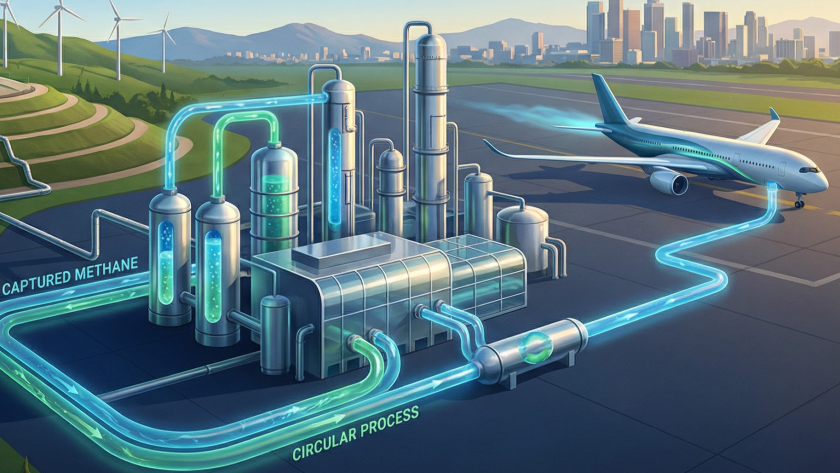
A Korean pilot plant converting landfill methane into sustainable aviation fuel demonstrates a scalable, circular pathway with global implications for net-zero flight
A pilot-scale facility in South Korea has achieved what until recently remained largely theoretical: the daily production of sustainable aviation fuel (SAF) directly from landfill gas. Delivering approximately 100 kilograms of SAF per…
Sustainable aviation fuel (SAF) has moved decisively from pilot programs to boardroom priority. What was once viewed as an experimental decarbonization lever is now emerging as the aviation sector’s most credible pathway to meet tightening climate mandates-without grounding growth.
According to the Sustainable Aviation Fuel Market Report 2026, the global SAF market is set to…
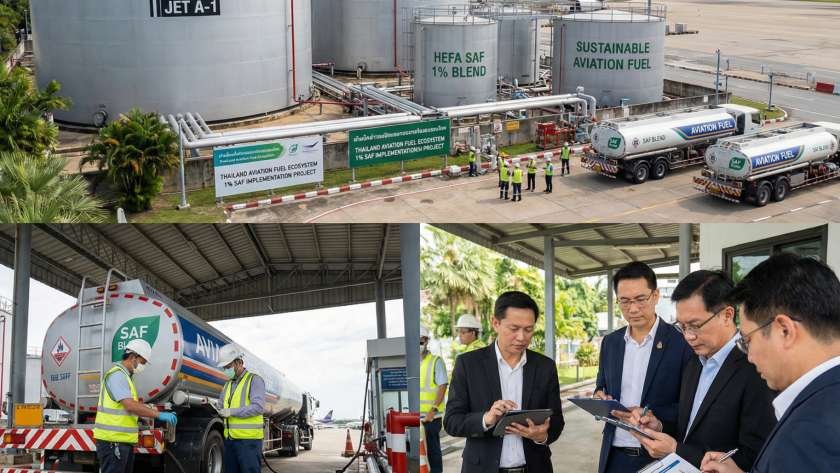
Thailand has formally entered a new era of sustainable aviation with the implementation of a 1% Sustainable Aviation Fuel (SAF) blend in Jet A-1 fuel starting January 1, 2026. The Department of Energy Business (DEB) has issued standards that classify jet fuel into three categories: conventional Jet A-1, co-hydroprocessed fuel, and Jet A-1 blended with…
Executive Brief
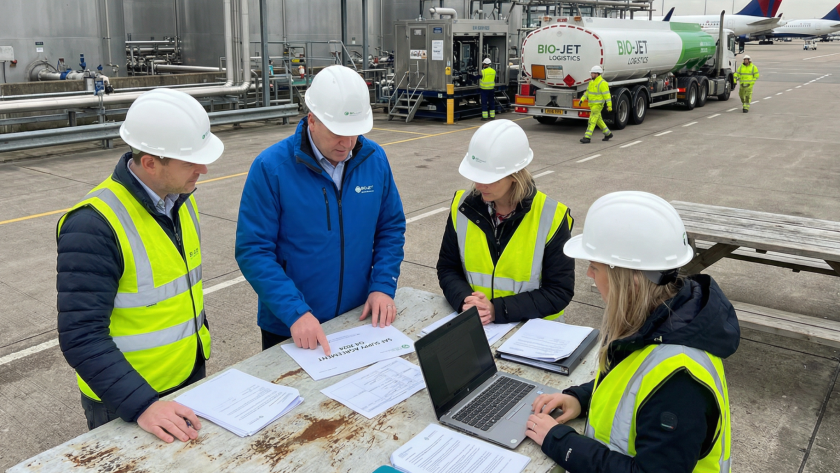
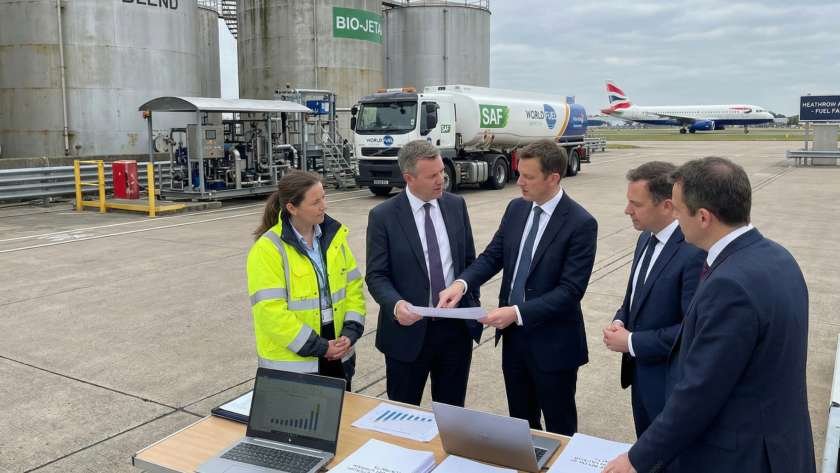
The UK government has launched an open consultation on the proposed Sustainable Aviation Fuel (SAF) Revenue Certainty Mechanism, marking a decisive step toward de-risking private investment in low-carbon aviation fuels. For C-suite leaders across energy, aviation, infrastructure, and finance, this initiative represents more than regulatory housekeeping-it is a strategic market signal designed to…
Regulatory Clearance Marks Key Milestone
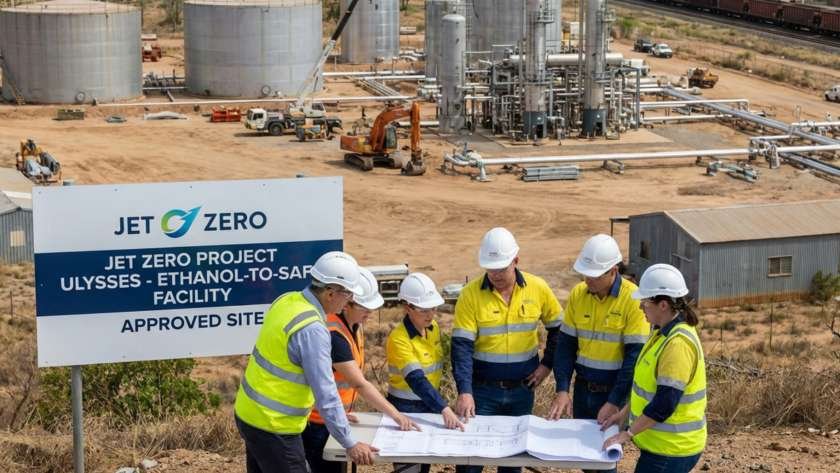
The Queensland government has granted environmental approval to Australian bioenergy developer Jet Zero for its Townsville-based sustainable aviation fuel (SAF) development, Project Ulysses.
The approval confirms the project’s regulatory readiness and significantly de-risks its pathway toward a final investment decision (FID) in 2026, according to Jet Zero. The decision positions…
Brazil has taken a decisive step in its aviation decarbonization journey: Salvador Bahia Airport has become the country’s first airport to supply sustainable aviation fuel (SAF) for regular commercial operations. Starting in November 2025, the airport began delivering blended SAF for daily flights operated by two major Brazilian carriers, setting a new benchmark for sustainable aviation in…
The global push for low-carbon aviation accelerated in December 2025, with major developments in sustainable aviation fuel (SAF) supply, certification, policy, and production capacity. For C-suite leaders in aviation, energy, and logistics, these moves signal a clear shift: SAF is no longer a niche experiment, but a core lever for decarbonization, regulatory compliance, and long-term competitiveness.
From…
Decarbonizing Where Batteries Can’t
Across industries like aviation, shipping, and heavy manufacturing, decarbonization remains one of the most complex challenges. These sectors depend on high-energy-density liquid fuels, where battery electrification is not technically or economically viable.
While hydrogen holds immense promise as a clean energy carrier, transporting and storing pure hydrogen remains difficult and costly,…
Highlights
Evaluates the trade-off between cost and emission reductions across the full SAF lifecycle.
Forecasts production costs for 29 SAF pathways using a multiple regression model.
Identifies HEFA as the most cost-effective production route.
Finds Fischer-Tropsch (FT) fuels deliver the strongest carbon mitigation performance.
Aviation’s Turning Point: The Need for Sustainable Fuels
Global air…
A New Era of Clean Energy Begins
The world’s energy transition is moving faster than ever, and one innovation stands out: e-fuels. These synthetic fuels are rapidly becoming essential for decarbonizing sectors that cannot simply switch to electricity such as aviation, shipping, and heavy industry.
The global e-fuels market was valued at around USD 18…