
Highlights
- Evaluates the trade-off between cost and emission reductions across the full SAF lifecycle.
- Forecasts production costs for 29 SAF pathways using a multiple regression model.
- Identifies HEFA as the most cost-effective production route.
- Finds Fischer-Tropsch (FT) fuels deliver the strongest carbon mitigation performance.
Aviation’s Turning Point: The Need for Sustainable Fuels
Global air travel is rebounding strongly, approaching pre-pandemic demand. While this recovery supports economic growth, it also intensifies aviation’s carbon challenge. Between 2005 and 2020, aviation-related CO₂ emissions rose by 70 percent, contributing over 2 percent of global emissions. Without intervention, that figure could more than triple by 2050.
International frameworks such as CORSIA and IATA’s 2050 net-zero commitment are driving the sector toward cleaner alternatives. While electric and hydrogen-powered aircraft are still years away, sustainable aviation fuel (SAF) offers an immediate path forward.
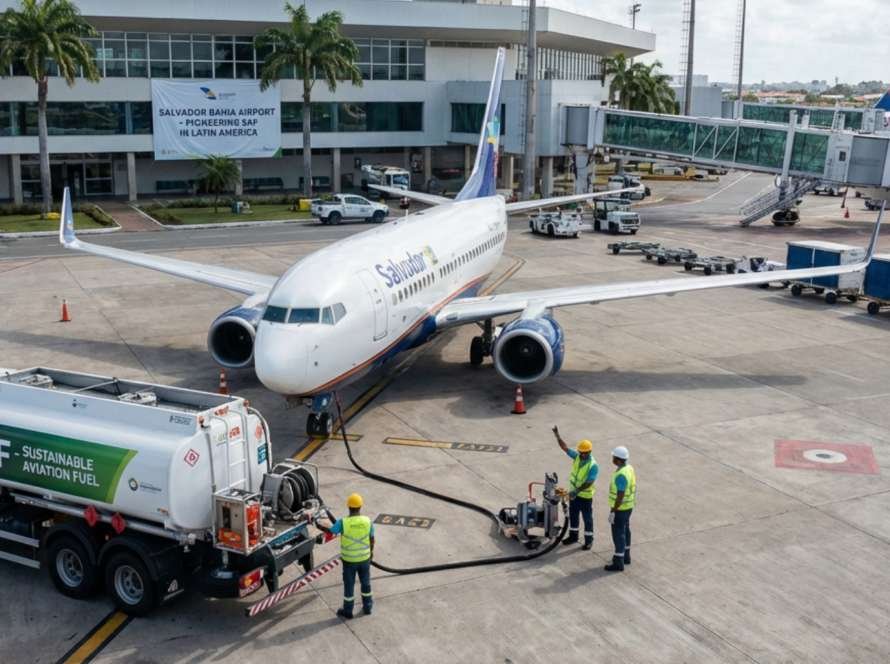
SAF can reduce lifecycle emissions by up to 80 percent and can be used in existing aircraft without modification. This makes it a critical bridge technology for decarbonizing aviation while maintaining operational continuity.
Understanding SAF Production Pathways
Currently, four primary SAF technologies are certified for commercial use:
- Hydroprocessed Esters and Fatty Acids (HEFA)
- Fischer-Tropsch (FT)
- Alcohol-to-Jet (ATJ)
- Synthetic Iso-Paraffinic (SIP)
All are recognized under CORSIA, with a total of 29 approved production pathways meeting sustainability criteria. However, the cost of production and carbon reduction efficiency vary significantly across these methods.
As of 2023, SAF accounted for only 0.2 percent of global jet fuel consumption. Despite rapid growth, production levels remain far below the target needed to achieve net-zero aviation.
Balancing Cost and Carbon Reduction
A comparative analysis of all 29 pathways reveals key insights:
- HEFA: The most cost-effective pathway due to mature technology and scalable waste-oil feedstocks.
- Fischer-Tropsch (FT): Best lifecycle carbon abatement cost, offering strong long-term sustainability.
- Alcohol-to-Jet (ATJ): Flexible but currently limited by high processing costs.
- Synthetic Iso-Paraffinic (SIP): Still early in development but holds promise for future innovation.
Overall, SAF production costs remain 3–5 times higher than fossil jet fuel. However, carbon pricing, subsidies, and renewable electricity cost reductions are narrowing this gap.
Regional Progress and Policy Models
Global SAF progress is being shaped by regional policy frameworks:
- United States: Focuses on tax credits and carbon trading (Inflation Reduction Act, LCFS) to reduce SAF production costs.
- European Union: Relies on mandates such as ReFuelEU, requiring 6 percent SAF blends by 2030, including 2.6 percent e-fuels.
- Asia-Pacific: Uses capital subsidies and waste-feedstock localization to support early production in China and India.
Each region demonstrates a unique pathway toward scaling SAF: policy-driven cost control (US), mandate-based scale-up (EU), and subsidy-led localization (Asia).
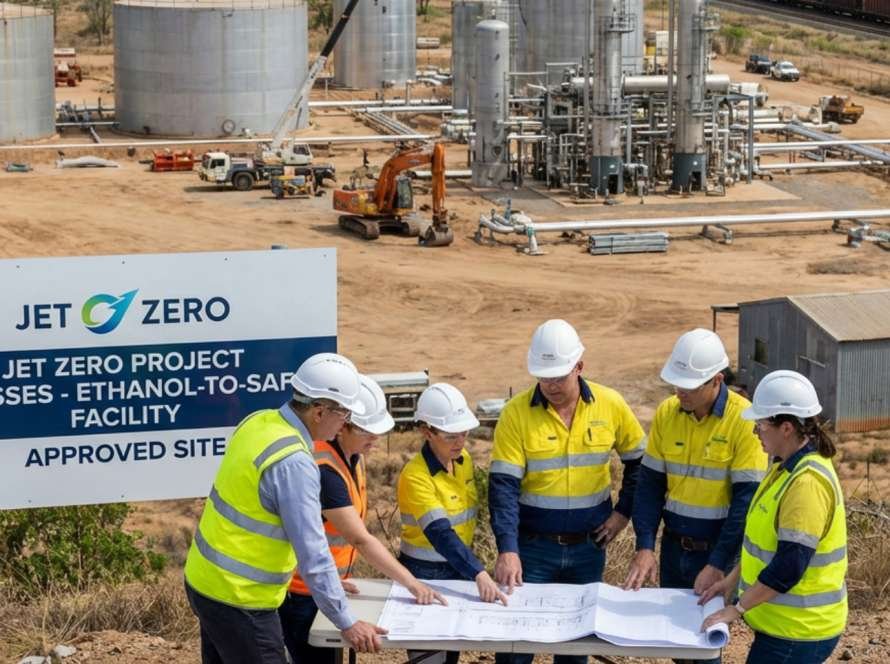
Australia’s first commercial-scale alcohol-to-jet SAF project
Key Findings and Strategic Implications
- Short-Term Priority: HEFA fuels offer the fastest route to commercial scale, supported by available feedstocks and mature technology.
- Long-Term Outlook: Fischer-Tropsch fuels hold the greatest potential for deep carbon reductions as technology and investment mature.
- Integrated Approach: Achieving aviation decarbonization requires aligning economic, environmental, and policy strategies across all stakeholders.
Conclusion: Charting the Path to Net-Zero Aviation
Sustainable aviation fuel stands at the heart of aviation’s clean energy transformation. It combines technical feasibility, emission reduction, and compatibility with existing systems, making it a practical near-term solution.
Among all certified pathways, HEFA delivers the lowest production costs, while Fischer-Tropsch fuels offer the highest carbon mitigation potential. With coordinated global action and supportive policy frameworks, SAF can evolve from a promising technology into the primary enabler of net-zero aviation.
The journey toward decarbonized air travel has begun, and SAF is the engine driving it forward