
A New Era of Clean Energy Begins
The world’s energy transition is moving faster than ever, and one innovation stands out: e-fuels. These synthetic fuels are rapidly becoming essential for decarbonizing sectors that cannot simply switch to electricity such as aviation, shipping, and heavy industry.
The global e-fuels market was valued at around USD 18 billion in 2024 and is expected to grow to USD 22.5 billion by 2025. By 2035, it could surge to nearly USD 196 billion, expanding at an impressive 24 percent CAGR.
This surge reflects more than just numbers. It signals a global shift driven by tighter carbon rules, large-scale renewable investments, and a growing push toward Power to X technologies that convert clean electricity into synthetic fuels.
What Are E-Fuels and Why They Matter
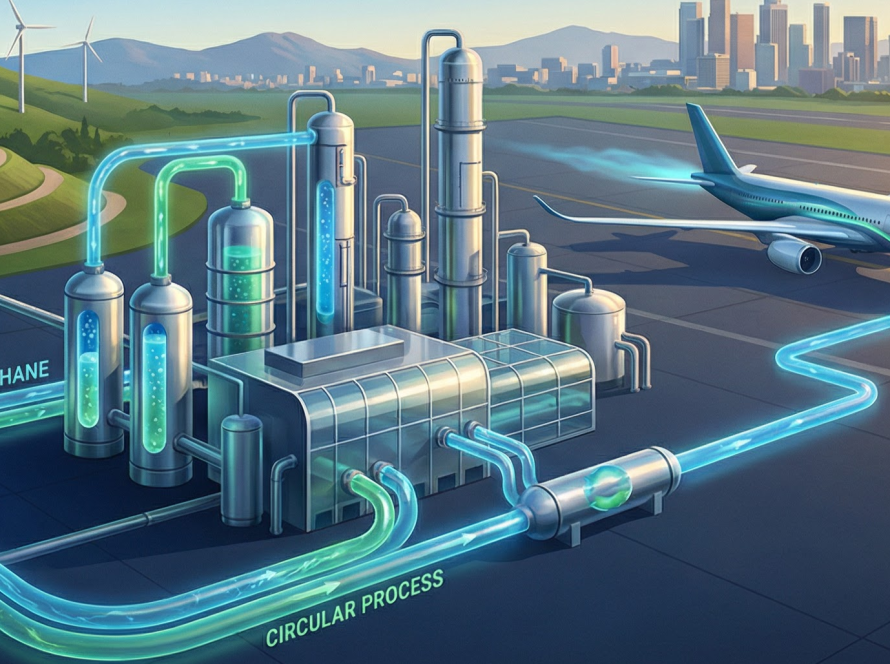
E-fuels, also called electrofuels or Power to X fuels, are produced using renewable energy, water, and captured carbon dioxide. Through electrolysis, hydrogen is extracted from water using renewable power. This hydrogen is then combined with carbon dioxide to create hydrocarbons that closely resemble gasoline, diesel, or jet fuel in both performance and compatibility.
The real advantage is their ability to work with what we already have. E-fuels can be used in existing engines, aircraft, ships, and fuel distribution systems without major modifications. They are drop-in replacements for fossil fuels that fit seamlessly into today’s infrastructure.
Why the Market is Growing So Fast
Several factors are driving this rapid expansion.
Global climate commitments, including the Paris Agreement, have forced governments to set stricter emissions limits.
Carbon pricing and subsidies are making e-fuels more competitive than before. Falling renewable power costs and breakthroughs in carbon capture are making production more viable at scale.
In short, e-fuels are benefiting from the perfect alignment of policy, technology, and economics.
Regional Leaders and Global Insights
Europe currently leads the global e-fuels market with nearly half of total production. Policies such as ReFuelEU Aviation and the Renewable Energy Directive are setting clear targets for sustainable fuel adoption. Countries like Germany, Spain, and the Netherlands are investing heavily in new production facilities, while projects like Haru Oni in Chile, supported by European funding, highlight the continent’s global reach.
Asia Pacific is catching up fast. Massive renewable investments in China, India, and Australia are driving regional growth. The rapid expansion of aviation and new climate pledges make this region a hotspot for e-kerosene adoption.
In North America, the U.S. Sustainable Aviation Fuel Grand Challenge aims to produce three billion gallons annually by 2030, ensuring strong momentum on the policy front.
Emerging Trends Defining the E-Fuels Revolution
Direct Air Capture (DAC) Integration
New technologies now allow carbon dioxide to be captured directly from the air. This creates truly carbon-neutral fuels while reducing dependence on industrial emissions.
Strategic Collaborations
Airlines, automakers, and energy companies are forming alliances to secure e-fuel supplies and build reliable distribution networks. These long-term partnerships help reduce investment risk and speed up deployment.
Power to Liquid (PtL) Dominance
Power to Liquid technology accounts for nearly 70 percent of e-fuel production. It uses hydrogen and carbon dioxide to produce liquid hydrocarbons that can replace gasoline, diesel, or jet fuel. This process offers immediate scalability and compatibility with existing energy systems.
Why Aviation is Leading the Shift
Aviation accounts for the largest share of e-fuel demand, around 35 to 40 percent in 2025. The reason is simple: there is no realistic alternative for long-haul flights.
Battery technology still lacks the energy density needed for intercontinental travel, while hydrogen in its gaseous form poses storage and infrastructure challenges. That makes e-kerosene the most practical near-term solution for clean aviation.
With global air traffic expected to double by 2040 and stricter regulations on emissions blending, airlines are under growing pressure from investors and passengers alike to act. For them, e-fuels are not optional; they are essential.
Applications Across Industries
Aviation Sustainable jet fuels are becoming central to airline decarbonization strategies.
Shipping E-ammonia and e-methanol are powering cargo vessels with zero-emission propulsion systems.
Heavy Industry E-fuels are being used as industrial heat sources and feedstocks for steel, cement, and chemical manufacturing.
These applications share a common advantage: e-fuels allow companies to meet net-zero targets without rebuilding entire systems from scratch.
Market Challenges and the Road Ahead
Despite their potential, e-fuels face significant challenges. Production remains energy-intensive, requiring up to five times more electricity per unit of fuel than direct electrification. Current costs range between USD 3 and USD 6 per liter, far higher than fossil alternatives.
Large-scale projects demand major investment, and efficiency losses remain a concern. Overcoming these barriers will require continuous innovation, economies of scale, and strong government incentives.
However, the opportunity is enormous. For sectors like shipping and aviation, which cannot rely solely on batteries, e-fuels are the most viable path to deep decarbonization. Their compatibility with existing engines and global infrastructure makes them practical during this crucial decade of transition.
Conclusion: Powering the Future Sustainably
E-fuels are no longer a distant vision; they are the bridge between today’s energy system and a carbon-free future. They transform renewable electricity into liquid energy that powers planes, ships, and factories without overhauling global supply chains.
As technology scales and costs decline, e-fuels will redefine how the world moves and produces. They are both a challenge and an opportunity: a pathway to decarbonize without disruption and to build a future powered by innovation and sustainability.