
Decarbonizing Where Batteries Can’t
Across industries like aviation, shipping, and heavy manufacturing, decarbonization remains one of the most complex challenges. These sectors depend on high-energy-density liquid fuels, where battery electrification is not technically or economically viable.
While hydrogen holds immense promise as a clean energy carrier, transporting and storing pure hydrogen remains difficult and costly, particularly over long distances. That’s where green hydrogen–based e-Fuels redefine the path forward.
The Solution: PEM Electrolyzers Powering e-Fuel Production
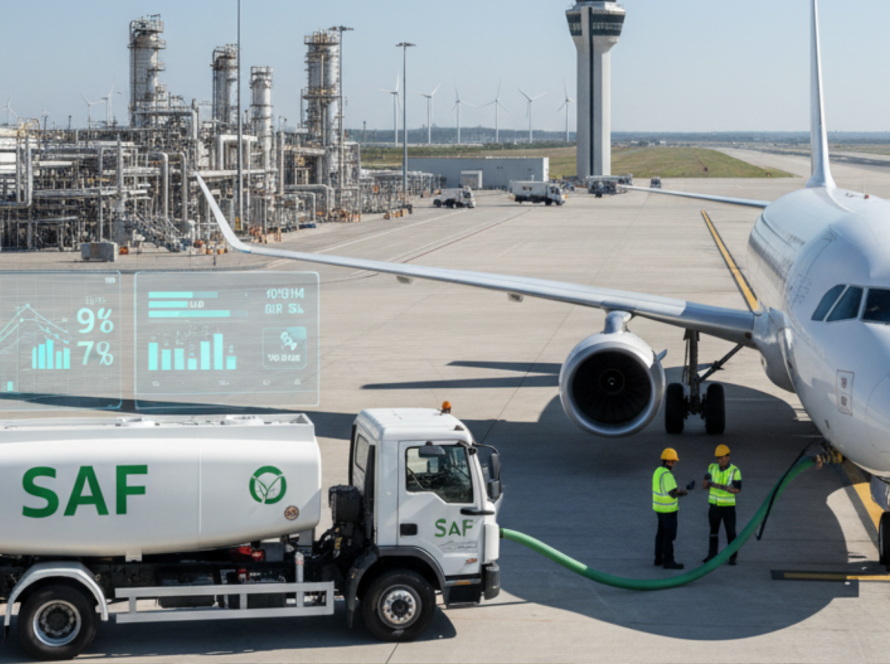
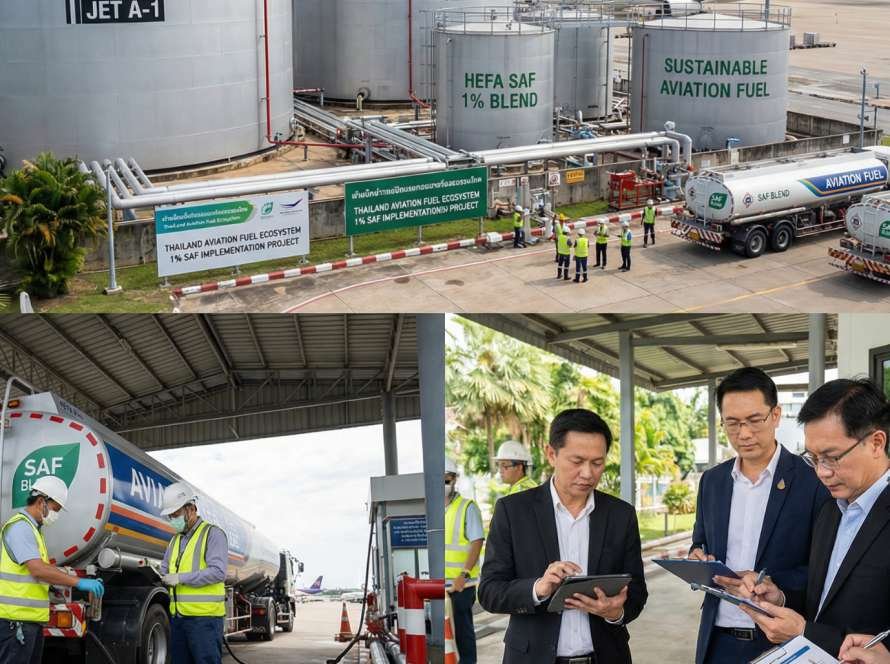
By deploying PEM (Proton Exchange Membrane) electrolyzers powered by renewable energy sources, hydrogen can be produced cleanly and converted into sustainable e-Fuels such as methanol, synthetic aviation fuel (SAF), and ammonia.
These carbon-neutral fuels integrate directly into existing infrastructure, providing a practical route to decarbonize sectors resistant to electrification. Because they share physical properties with fossil fuels, e-Fuels can be transported, stored, and used without extensive retrofitting or supply chain disruption.
Moreover, e-Fuels act as hydrogen carriers, simplifying long-distance hydrogen transport. When pure hydrogen is required, it can be efficiently recovered using advanced cracking technologies.
Key Advantages
- Enables Power-to-X energy conversion for flexible storage and distribution
- Replaces gray hydrogen in industrial production
- Supports sector coupling between energy, transport, and chemical industries
e-Fuels: A Scalable Alternative to Fossil Fuels
e-Fuels, created from green hydrogen and captured carbon dioxide, form a closed carbon loop that drastically reduces lifecycle emissions. They retain the energy density and compatibility that heavy industries depend on while aligning with global net-zero goals.
For C-level leaders, e-Fuels present a scalable and investment-ready solution—bridging the gap between today’s infrastructure and tomorrow’s sustainable energy ecosystem.
e-SAF and Fischer–Tropsch fuels as long-term decarbonization routes read more
From Green Hydrogen to e-Fuels
| Process | How It Works | Impact |
| e-Methanol | Renewable hydrogen combines with captured CO₂ through methanol synthesis to produce CH₃OH. This liquid fuel can be handled and distributed using existing systems. | Chemically identical to fossil methanol but significantly lowers lifecycle greenhouse gas emissions, supporting chemical, transport, and maritime decarbonization. |
| e-SAF (Sustainable Aviation Fuel) | Produced from renewable electricity, water, and CO₂ via Fischer–Tropsch or Methanol-to-Jet (MTJ) synthesis. Classified as a Renewable Fuel of Non-Biological Origin (RFNBO). | Drop-in compatible with aircraft engines and fueling systems; delivers major lifecycle emission reductions without infrastructure changes. |
| e-Ammonia | Synthesized from renewable hydrogen and nitrogen (N₂) through the Haber-Bosch process powered by clean electricity. | Functions as a zero-carbon maritime fuel and hydrogen carrier, facilitating long-distance renewable hydrogen transport and storage. |
The Path Forward
The global energy landscape is evolving toward net-zero emissions, and green hydrogen–based e-Fuels stand at the center of that transformation.
By integrating PEM electrolyzer technology with renewable power, industries can create a sustainable, circular fuel economy that maintains reliability while cutting carbon intensity.Early adoption offers a competitive edge, enhancing energy resilience, reducing dependence on fossil imports, and establishing leadership in the clean-fuel transition.