

From Landfill to Jet Engine: Korea’s SAF Breakthrough Signals a New Era for Aviation Decarbonization
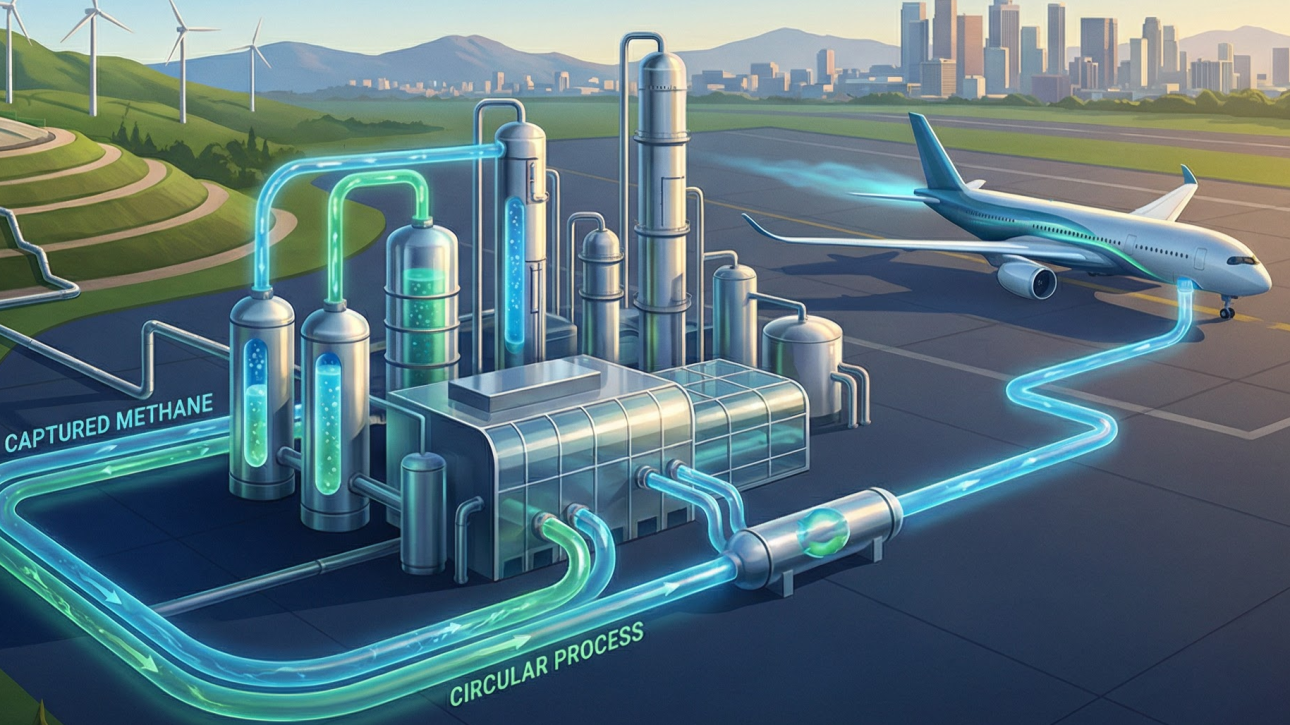
A Korean pilot plant converting landfill methane into sustainable aviation fuel demonstrates a scalable, circular pathway with global implications for net-zero flight
A pilot-scale facility in South Korea has achieved what until recently remained largely theoretical: the daily production of sustainable aviation fuel (SAF) directly from landfill gas. Delivering approximately 100 kilograms of SAF per day, the project validates a decentralised, waste-based fuel pathway that could materially alter the global aviation decarbonization equation.
Led by the Korea Research Institute of…
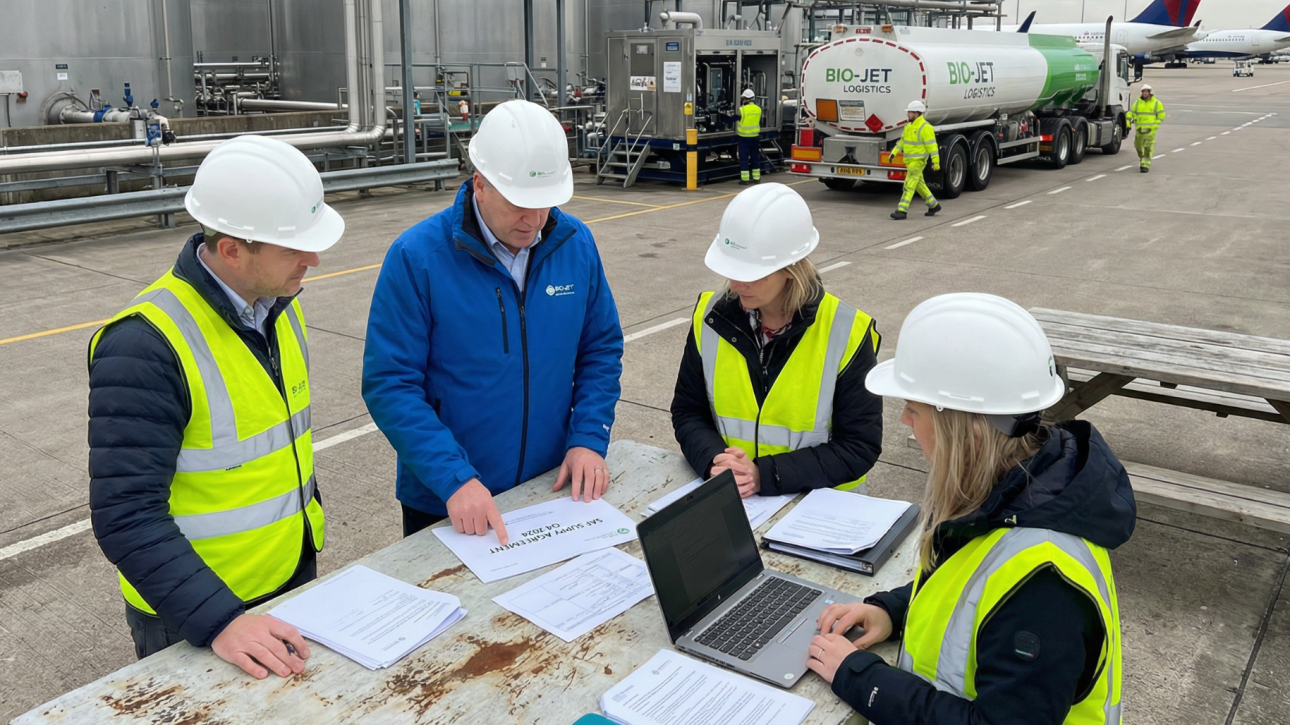
Sustainable aviation fuel (SAF) has moved decisively from pilot programs to boardroom priority. What was once viewed as an experimental decarbonization lever is now emerging as the aviation sector’s most credible pathway to meet tightening climate mandates-without grounding growth.
According to the Sustainable Aviation Fuel Market Report 2026, the global SAF market is set to expand from $3.7 billion in 2025 to $5.75 billion in 2026, before accelerating to $26.1 billion by 2030. This trajectory signals more than rapid adoption-it…
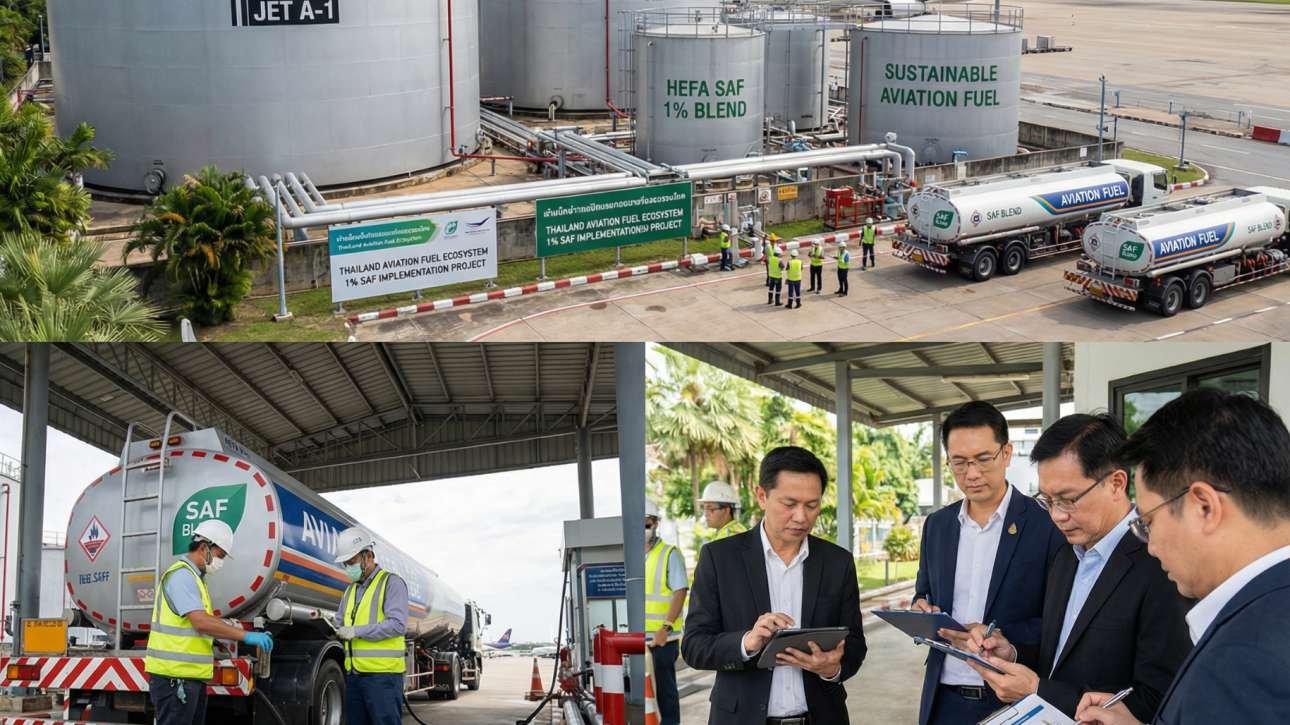
Thailand has formally entered a new era of sustainable aviation with the implementation of a 1% Sustainable Aviation Fuel (SAF) blend in Jet A-1 fuel starting January 1, 2026. The Department of Energy Business (DEB) has issued standards that classify jet fuel into three categories: conventional Jet A-1, co-hydroprocessed fuel, and Jet A-1 blended with SAF.
This strategic policy ensures that feedstocks and production comply with ASTM D7566, with initial SAF production limited to HEFA (Hydroprocessed Esters and Fatty Acids)…
From Landfill to Jet Engine: Korea’s SAF Breakthrough Signals a New Era for Aviation Decarbonization
A Korean pilot plant converting landfill methane into sustainable aviation fuel demonstrates a scalable, circular pathway with global implications for net-zero flight
A pilot-scale facility in South Korea has achieved what until recently remained largely theoretical: the daily production of sustainable aviation fuel (SAF) directly from landfill gas. Delivering approximately 100 kilograms of SAF per day, the project validates a decentralised, waste-based fuel pathway that could materially alter the global aviation decarbonization equation.
Led by the Korea Research Institute of…
Sustainable aviation fuel (SAF) has moved decisively from pilot programs to boardroom priority. What was once viewed as an experimental decarbonization lever is now emerging as the aviation sector’s most credible pathway to meet tightening climate mandates-without grounding growth.
According to the Sustainable Aviation Fuel Market Report 2026, the global SAF market is set to expand from $3.7 billion in 2025 to $5.75 billion in 2026, before accelerating to $26.1 billion by 2030. This trajectory signals more than rapid adoption-it…
Thailand has formally entered a new era of sustainable aviation with the implementation of a 1% Sustainable Aviation Fuel (SAF) blend in Jet A-1 fuel starting January 1, 2026. The Department of Energy Business (DEB) has issued standards that classify jet fuel into three categories: conventional Jet A-1, co-hydroprocessed fuel, and Jet A-1 blended with SAF.
This strategic policy ensures that feedstocks and production comply with ASTM D7566, with initial SAF production limited to HEFA (Hydroprocessed Esters and Fatty Acids)…