
The global push for low-carbon aviation accelerated in December 2025, with major developments in sustainable aviation fuel (SAF) supply, certification, policy, and production capacity. For C-suite leaders in aviation, energy, and logistics, these moves signal a clear shift: SAF is no longer a niche experiment, but a core lever for decarbonization, regulatory compliance, and long-term competitiveness.
From expanded SAF supply agreements across three continents to new CORSIA-aligned certifications, regional policy roadmaps, and fresh investment in production and digital platforms, the sector is aligning around a common imperative: scaling SAF to meet both voluntary climate targets and binding regulatory mandates.
Global SAF Supply Expands Across Major Regions
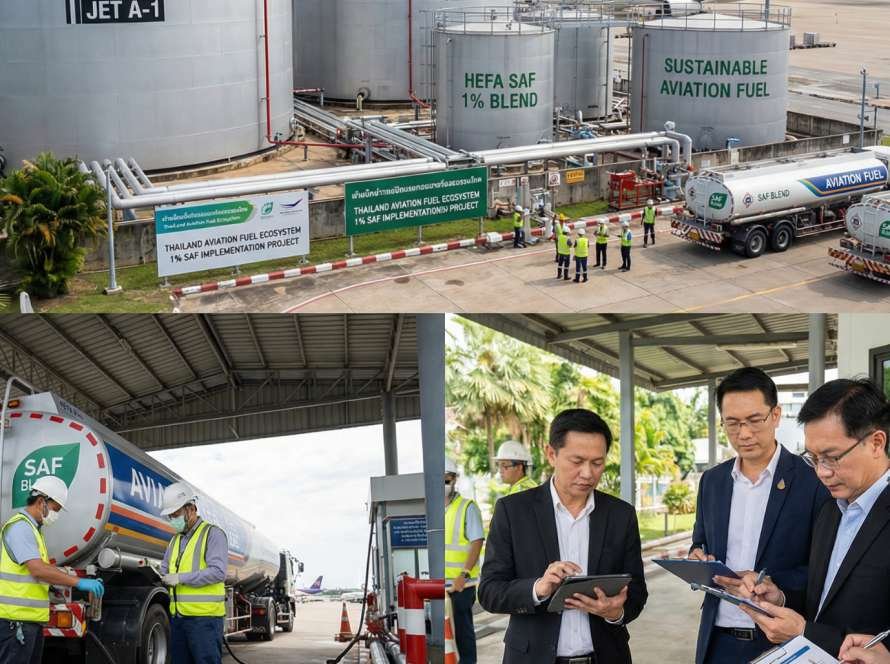
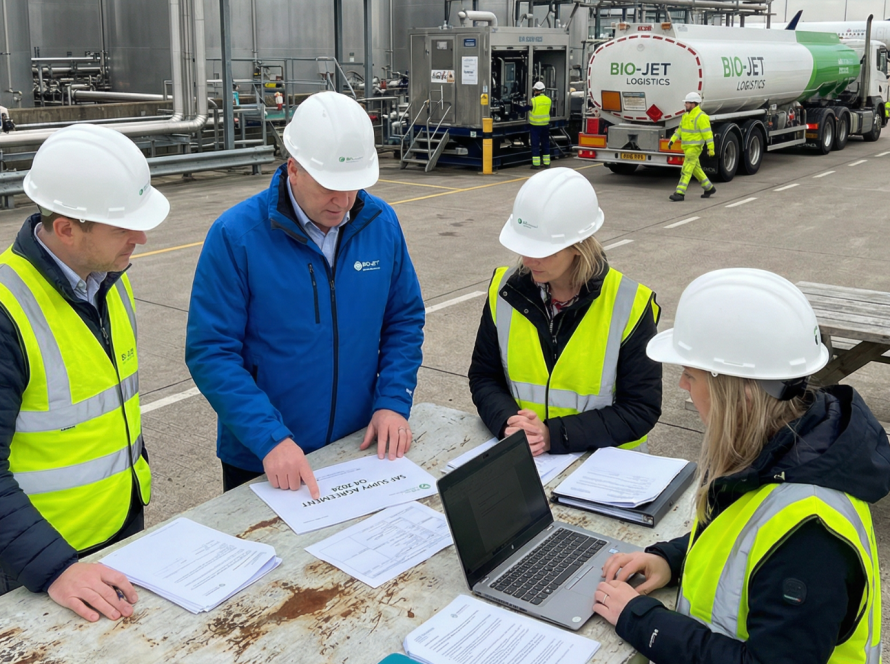
A leading renewable fuels producer has agreed to supply sustainable aviation fuel for a major airline group’s operations across Europe, the United States, and Asia-Pacific, supporting its strategy to scale up SAF usage across a global network.
The arrangement leverages the producer’s established SAF supply capabilities at key international hubs:
- Blended SAF is being delivered into fuel infrastructure at major European and U.S. airports for passenger flights.
- In the Asia-Pacific region, SAF is being supplied to a major international hub for use on cargo operations by an all-cargo carrier within the group.
This multi-region approach demonstrates how airlines can now access SAF at scale across their core markets, enabling them to reduce the lifecycle greenhouse gas emissions of their air travel and freight operations while meeting customer and investor expectations for climate action.
CORSIA Certification Strengthens SAF Credibility
A Hong Kong-based renewable fuels company has secured RSB ICAO CORSIA certification for its sustainable aviation fuel, confirming that it meets stringent international criteria for lifecycle GHG reductions, protection of high-carbon and high-biodiversity areas, robust social safeguards, and full traceability of feedstock and production.
For airlines and fuel buyers, this certification:
- Validates the environmental integrity of the SAF, making it eligible for CORSIA compliance and other emerging SAF mandates.
- Enhances transparency and trust in the supply chain, which is increasingly critical for ESG reporting and stakeholder engagement.
The company notes that this certification will support its strategy to expand in international SAF markets and to partner with airlines and fuel suppliers that must comply with CORSIA and other regulatory frameworks.
Policy Roadmap for Zero-Carbon Aviation
The SASHA Coalition, a group of zero-carbon aviation technology and infrastructure providers, has released a policy briefing outlining the environmental and economic benefits of zero-carbon emission flight, the barriers to commercialization, and the policy levers needed to overcome them.
Key recommendations for policymakers include:
- Introducing a mandate that all intra-EU flights under 400 km be zero-carbon by 2040.
- Ensuring that green hydrogen is available for aviation, including at key airports and along major routes.
- Establishing regional testbeds to demonstrate zero-carbon aviation technologies in real-world operations.
- Extending support for research, development, and early-stage deployment of zero-carbon aircraft and infrastructure.
For executives, this roadmap highlights the growing alignment between technology developers and regulators, and underscores the need for airlines and airports to engage proactively in shaping the policy environment for the next generation of low-carbon and zero-carbon aircraft.
Aviation Sustainability Platforms and Partnerships
A private aviation company has become a strategic investor in a digital carbon management platform focused on aviation sustainability. The investment will support the continued evolution of the platform’s functionality, expansion of its international footprint, and development of new client-facing offsetting tools.
Under the agreement:
- The aviation company will act as a lead partner for a new SAF Productivity, Operations, and Delivery (SAF POD) tool, accessible via the platform’s main interface.
- It will also work with the platform provider to procure and manage sustainable aviation fuel for its international fleet, with operations beginning in early 2026.
This partnership reflects a broader trend: aviation players are moving beyond simple SAF procurement to integrated digital platforms that manage carbon accounting, offsetting, and SAF logistics in a single, scalable solution.
SAF Capacity and Regional Gaps
According to projections by a leading aviation market intelligence firm, North America is currently the only global region on track to meet ICAO’s 2030 goal of a 5% reduction in CO₂ emissions from international aviation through the use of SAF and other clean energies.
All other regions-including Europe, Asia-Pacific, Latin America, Africa, and the Middle East-are forecast to fall short of this target unless significant additional SAF production capacity is developed. Globally, SAF facilities that are operational or under construction currently represent around 4.5% of global jet fuel supply in 2025.
For executives, this gap highlights both a risk and an opportunity: regions that fail to scale SAF capacity will face higher compliance costs and reputational pressure, while those that invest in production, feedstock, and offtake frameworks can position themselves as leaders in the low-carbon aviation ecosystem.
Comparative analysis of SAF pathways and lifecycle emissions performance read more
New SAF Production and Hydrogen Aircraft Progress
A U.S. renewable fuels and chemicals company has completed initial site work at its second SAF production facility in Nevada, with engineering, design, and project planning now underway and construction planned to begin in 2026. This expansion represents the next phase of its growth strategy and is expected to double its SAF production capacity to 80 million gallons annually.
In parallel, a France-based developer of hydrogen-electric business aircraft has:
- Completed a feasibility study for a new manufacturing site capable of producing 60 aircraft per year and creating hundreds of jobs.
- Reached Technology Readiness Level 6 (TRL6) for its full-scale hydrogen-electric propulsion system.
- Conducted the country’s first manned, fully hydrogen-electric flight.
The company has secured over $50 million in funding and more than $1 billion in Letters of Intent, underscoring growing investor and customer confidence in hydrogen as a viable pathway for regional and business aviation.
Airline Climate Leadership and Operational Efficiency
A UK leisure airline has been awarded an A- rating by CDP in its latest climate disclosure assessment, widely regarded as the global benchmark for environmental reporting. The improved rating from B to A- reflects leadership in decarbonising operations, setting science-based targets, and developing robust plans to reduce emissions.
The carrier’s strategy includes:
- Reducing carbon emissions per revenue passenger kilometer (RPK) by 35% by 2035 compared to 2019.
- Introducing new, more fuel-efficient Airbus A321neo aircraft, with over 150 on order.
Separately, another major airline group has expanded its group-wide fuel efficiency programme, which has already saved around 54,000 tonnes of jet fuel and avoided approximately 170,000 tonnes of CO₂ since 2022. The group aims to avoid an additional 50,000 tonnes of CO₂ annually by 2028 through digital tools, data-driven decision models, and optimised flight, taxiing, and water-loading procedures.
Africa’s SAF Ambition Takes Shape
A pan-African SAF initiative and the African Airlines Association have signed a Memorandum of Understanding to accelerate the deployment and production of sustainable aviation fuel across Africa.
Under the framework, the two parties will collaborate on:
- Advocacy and policy support to create an enabling environment for SAF.
- Capacity building and training for local stakeholders.
- Development of bankable SAF production projects.
- Mobilisation of resources and investment.
- Mapping of sustainable feedstocks and strengthening of supply chains.
The initiative is positioned as a digital marketplace, traceability platform, and project developer focused on aggregating and upcycling agricultural residues and other sustainable feedstocks across the continent, creating a scalable, Africa-centric model for SAF.
What C-Suite Leaders Should Do Next
For executives in aviation, energy, and related sectors, the December 2025 developments point to several clear actions:
- Secure long-term SAF offtake
Lock in multi-region SAF supply agreements to meet CORSIA, EU ETS, and other regulatory obligations while building a credible decarbonisation narrative for investors and customers. - Invest in digital carbon and SAF management
Adopt or partner with integrated platforms that manage SAF procurement, carbon accounting, and offsetting, improving transparency and operational efficiency. - Engage in policy shaping
Participate in regional and global dialogues on SAF mandates, green hydrogen for aviation, and zero-carbon flight roadmaps to influence rules that will define the next decade of aviation. - Assess regional SAF gaps and opportunities
Evaluate where SAF capacity is underdeveloped and explore partnerships in production, feedstock, and infrastructure to turn regional shortfalls into competitive advantages. - Integrate SAF into fleet and network strategy
Align aircraft procurement, route planning, and customer offerings with SAF availability and cost, ensuring that decarbonisation is embedded in core commercial decisions.
Looking Ahead
The December 2025 landscape shows that sustainable aviation fuel is moving from pilot projects to mainstream deployment, supported by global supply chains, robust certification, digital platforms, and clear policy signals.
For C-suite leaders, the message is clear: the low-carbon aviation transition is no longer a distant vision. It is being built today, in refineries, airports, boardrooms, and policy forums-and those who act with clarity, speed, and strategic alignment will define the future of the industry.